
Eye-Risk Warnings Now Required on All U.S. GLP-1 Drug Labels
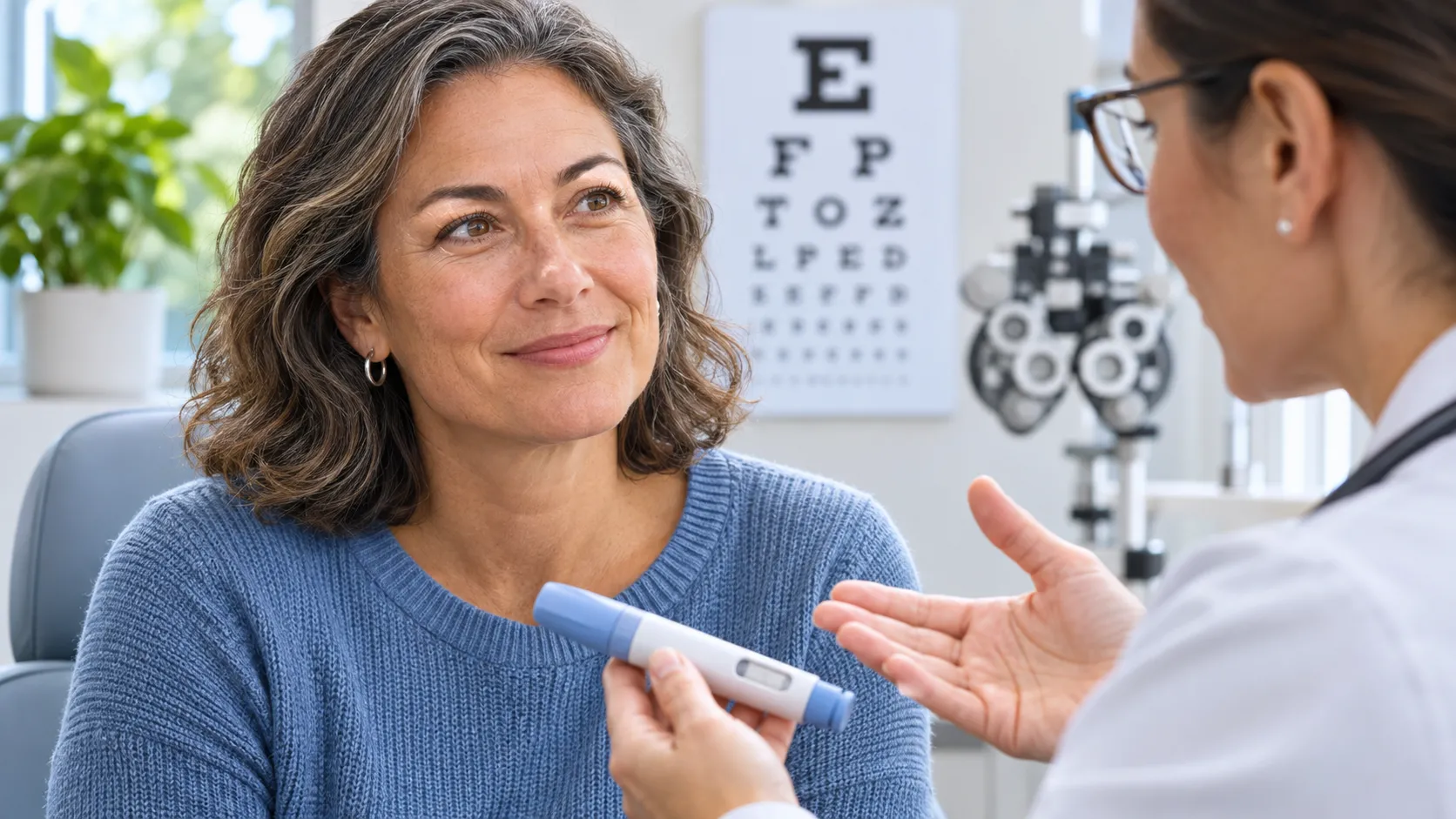
Part 1 of 6 in GLP-1 Agonists Explained- The FDA now requires a vision-loss warning on every GLP-1 drug in the U.S. This includes Ozempic, Wegovy, Rybelsus, Mounjaro, Zepbound, Trulicity and Saxenda. The warning is about NAION, a rare eye condition that can cause sudden, painless and sometimes permanent vision loss in one eye.
- The risk is small and the evidence is uncertain. In clinical trials, GLP-1 users had about 6 cases per 100,000 people per year, compared with about 4 on placebo. Studies of people in everyday care gave mixed results, and no one has found a biological explanation for how these drugs would cause it.
- Know the warning signs. Get medical care right away for sudden vision loss in one eye (often noticed on waking), blind spots, tunnel vision, changes in colour, or blurry central vision. Don’t stop your medication on your own. Talk to your prescriber first.
- Canada handles this separately, and it’s still in progress. Canada’s Wegovy monograph already lists NAION, and Health Canada says it is reviewing the risk for semaglutide. So far, though, Canada’s action covers only semaglutide, while the FDA’s warning covers the whole drug class.
The FDA now requires a GLP-1 vision loss warning on all labels in the U.S., covering a rare eye condition called NAION. The evidence shows a small, uncertain risk, and Canada’s regulatory response so far has focused on semaglutide. For the bigger picture, read our plain-language guide to Diabetes.
On November 9, 2026, the U.S. Food and Drug Administration (FDA) told the makers of GLP-1 drugs to add a new warning to their labels. The warning covers a possible higher risk of a rare eye condition called non-arteritic anterior ischemic optic neuropathy (NAION). It can cause sudden, painless vision loss in one eye, and that loss may be permanent. Most people know these medicines as diabetes and weight-loss drugs. The warning applies to the whole drug class, not only to the best-known brands. The list includes Ozempic, Rybelsus and Wegovy (semaglutide), Mounjaro and Zepbound (tirzepatide), Trulicity, Victoza, Saxenda, and Foundayo (orforglipron, approved in 2026). The new information must go in the Warnings and Precautions section of every GLP-1 label.
How strong is the evidence?
The FDA’s own data shows a small risk, and the numbers are uncertain. The agency combined results from 126 clinical trials covering more than 134,000 patients and found only 15 probable cases of NAION: 10 among people taking a GLP-1 drug and 5 among people taking a placebo. That works out to roughly 6 cases versus 4 cases for every 100,000 people followed for a year. The FDA also looked at a large group of U.S. adults with type 2 diabetes. Compared with people on another class of diabetes drugs (SGLT-2 inhibitors), GLP-1 users did not have a statistically significant increase in risk. Compared with people on a third class (DPP-4 inhibitors), their risk was modestly higher. Animal studies found no biological explanation for how these drugs could cause the condition.
The FDA also pointed out that many of the people who take these drugs already have risk factors for NAION, which makes individual case reports hard to interpret. Those risk factors include smoking, diabetes, high blood pressure, sleep apnea, anemia, and kidney disease.
This is a careful warning, and shouldn’t be cause for mass panic. The FDA has not shown that these drugs cause vision loss. It has decided that a small, uneven signal is worth telling patients and prescribers about. That is how drug safety monitoring is supposed to work, and it matters more as millions of people start these medications for longer periods. The practical advice is simple. Get medical care right away if you notice sudden vision loss in one eye (often on waking), blind spots, tunnel vision, changes in how colours look, or blurry central vision. Don’t stop your medication on your own. Talk it over with your prescriber, especially if you already have eye problems.
What this means for Canadians
The FDA’s decision doesn’t automatically change anything in Canada. Canada has its own regulatory system, and the U.S. labelling change does not apply here. Canada was already moving on this issue, though. The Health Canada–approved Wegovy product monograph lists NAION under Warnings and Precautions, in an update dated September. Last month, Health Canada said it had identified a potential safety risk with Ozempic, Rybelsus and Wegovy, naming NAION as the issue under review, but it has not yet published its findings. One difference stands out: the FDA’s warning covers the entire GLP-1 class, while Canada’s action so far has focused on semaglutide. Canadians taking tirzepatide (Mounjaro, Zepbound) or other GLP-1 drugs should watch for whether Health Canada widens its review.
The timing also matters. Canada became the first G7 country to approve a generic version of semaglutide in April 2026, so lower prices will likely bring more people onto these drugs. And because some websites misuse Health Canada logos to sell fake or unapproved products, buying from a licensed Canadian pharmacy is more important than ever. If you have any vision changes while taking one of these drugs, contact your doctor, and report the reaction to Health Canada through the Canada Vigilance Program.
Sources and further reading
Get Diabetes research updates by email
One email a month: new studies and plain-language articles from our health library.
Study alerts: an email only when a matching study opens. Community: our research team may contact you about studies that may fit. Join the community
Read the plain-language guide
Studies on this topic, enrolling now



Ready when you are
See which studies you may qualify for
About five minutes. Free, and no obligation to take part.