

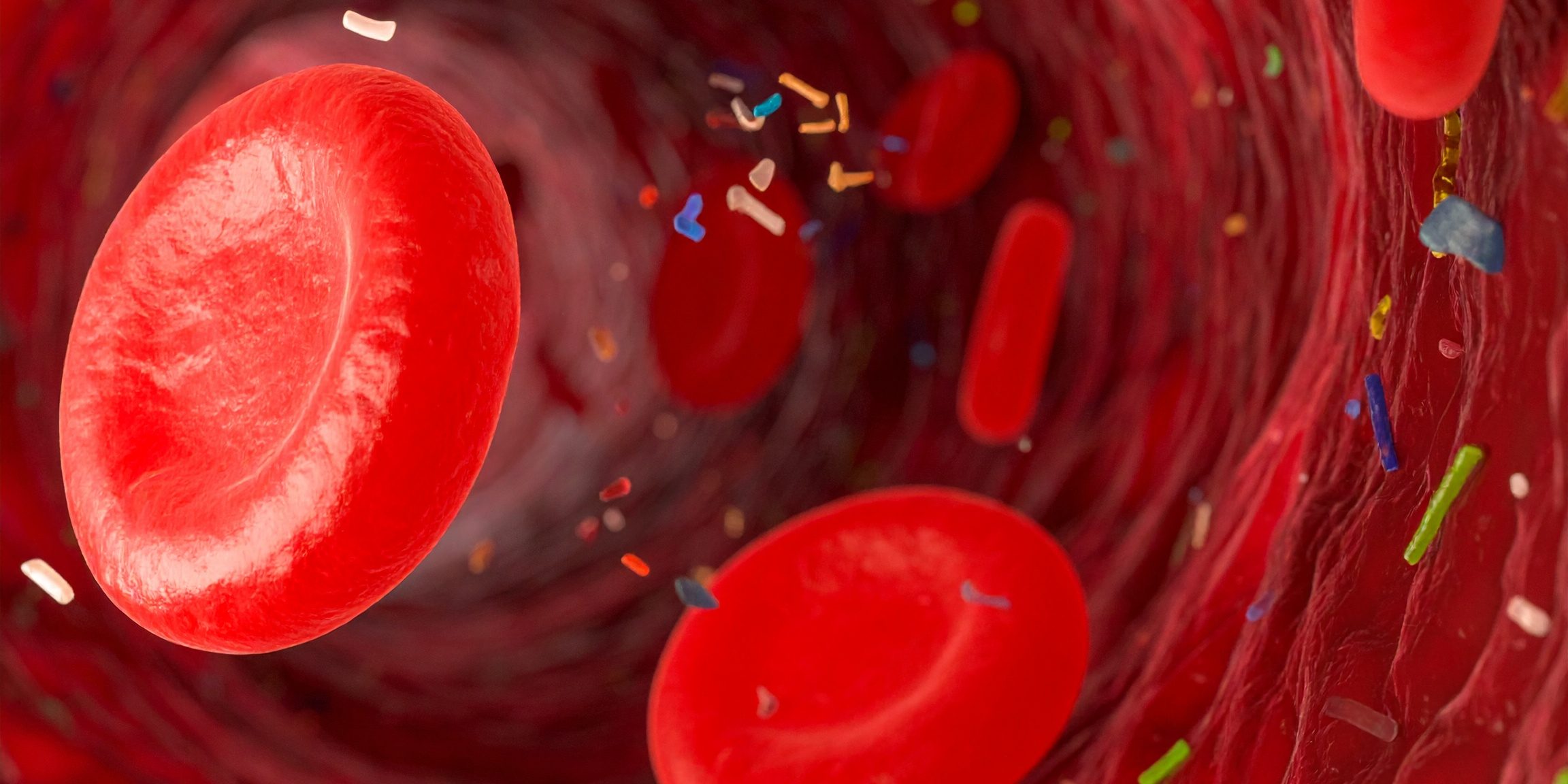
If you’ve read anything about microplastics and their presence within the human body, you’ve likely seen the rhetoric through a sinister lens. Plastic in your blood, your placenta, your arteries, and your brain. One widely shared story claimed we carry about a teaspoon of microplastics in our brains. Then came the sales pitches: $13,000 blood-cleaning clinics, “detox” protocols, and filters for everything.
The real story is stranger and more interesting than either panic or dismissal. The science has hit a measurement crisis at the same time as the public conversation reached peak alarm. Today, we’ll go over what statements hold up under scrutiny, and which don’t.
First, a toxicology reality check
It is extremely important to establish that finding a substance in the body is exposure, and doesn’t necessarily indicate harm. Toxicologists require key information such as dose, route, duration, and mechanism before calling something dangerous. Almost everyone carries trace amounts of many environmental compounds within their body, without any measurable effect. The microplastics question specifically is whether these particles are in us, how much, and if that matters for disease development. Each of those is a separate question with a separate evidence base.
Myth 1: “Researchers measured a spoonful of plastic in the human brain”
The headline-grabbing brain data came from pyrolysis–gas chromatography–mass spectrometry (Py-GC-MS), a technique that heats a tissue sample until it vaporizes and then identifies the molecules released. A published critique of the brain study flagged methodological challenges, particularly in lipid-rich tissues like the brain, where incomplete tissue removal and contamination are well-documented sources of false positives.
The core problem is that some small molecules released when polyethylene and PVC are heated can also be produced from fats in human tissue, so if the chemical digestion step leaves any tissue behind, the method can report plastic where none exists. One researcher pointed out that the brain is roughly 60 percent fat. A January 2025 analysis led by Dr. Cassandra Rauert concluded that Py-GC-MS is currently not reliable for identifying certain plastics in human tissue, and her review listed 18 studies that hadn’t accounted for this false-positive risk. A Guardian investigation counted at least seven studies that have been formally challenged in the journals that published them.
The defenders aren’t silent either. The lead of the 2022 study that first reported plastic in human blood defended her results; researchers say testing methods are improving rapidly, and uncertainty about the amounts of microplastics in the body is shrinking.
Translation: Plastic particles in human tissue are plausible and likely real. The specific quantities in headline studies, especially in the brain, are now seriously disputed.
Myth 2: “Microplastics in your arteries quadruple your heart attack risk”
This comes from the most influential clinical study in the field: a 2024 New England Journal of Medicine paper by Marfella and colleagues. They analyzed carotid plaque from 257 patients undergoing endarterectomy (a surgical procedure that removes fatty plaque from the lining of a narrowed or blocked artery to restore normal blood flow). At a mean follow-up of about 34 months, 20% of patients with microplastics or nanoplastics in their plaque had a heart attack, stroke, or died, versus 7.5% of those without. After adjustment, the hazard ratio was 4.53 (95% CI 2.00 to 10.27). The team also saw jagged-edged foreign particles on electron microscopy among plaque macrophages, an independent line of evidence beyond Py-GC-MS.
That’s a real finding, but not the one the headline implies, and the authors said so. They stressed the results do not prove causality. Study limitations include an observational design, potential unmeasured confounding, and no data on particulate-matter exposure or socioeconomic status. Outside cardiologists suspected that the hazard ratio may be overinflated given the small study size. One reviewer put the alternative neatly: plastic in plaque could be a marker of some other exposure doing the real damage. And the detection method was Py-GC-MS, the same technique now under scrutiny, though the electron microscopy adds some independent support.
Bottom-line: A strong signal worth follow up research in larger populations, but not proof that microplastics cause heart attacks.
The opposite myth: “It’s all overblown, so ignore it”
Skepticism about measurement isn’t the same as an all-clear. Experts note there’s little hard data showing that microplastics cause harm, yet many scientists think they could eventually be proven harmful. The honest answer is unknown, which is different from safe. Studies on blood, placenta, lung tissue, and plaque exist, but they’re small, and the field’s tools are still maturing.
Myth 3: “A blood-filtering detox can clear plastics out of you”
Clinics now offer microplastic “blood cleaning” for fees around $13,000, using devices that combine activated carbon with a proprietary plasma system. Critics warn the controversy has fueled “scaremongering” and expensive, unscientific treatments. There’s no scientific consensus that this treatment works, and one clinical-practice review found that no diet, supplement, sauna, chelation, or blood-filtering procedure has been shown to remove microplastics from the body. That’s a hospital-network blog rather than a systematic review, so treat it as a summary of the landscape, not a definitive citation. It also fits the broader logic: if the measurement of what’s in the body is shaky, claims about removing it are even shakier.
Don’t pay for this. There’s no evidence it works, and the “before and after” numbers rely on the same disputed measurements.
What you can reasonably do
The evidence for health benefits from cutting exposure doesn’t exist yet. But some steps are cheap, harmless, and reduce your potential exposure to microplastics:
- Choose tap over bottled water. Bottled water generally contains more particles than municipal tap water, partly because the bottle and cap shed fragments. A 2019 Environmental Science & Technology estimate (a modeled calculation, not a health outcome) suggested that people drinking only bottled water ingest about 90,000 additional microplastics per year, versus roughly 4,000 for tap water.
- Don’t heat food in plastic. Experts advise that microwaving food in plastic can leach particles and chemicals into it, even with a “microwave-safe” label. Glass or ceramic costs nothing extra.
- Vacuum and dust regularly. Indoor air and house dust can be among the biggest exposure sources.
The bottom line
Microplastics are one of those topics where “scientists are worried” and “scientists are arguing about the data” are both true. The sensible stance is to take the hypothesis seriously without paying for solutions to a problem we can’t yet measure well. Cut the easy exposures, ignore the detox industry, and watch for better-controlled human studies as measurement methods improve.
This post is educational, not personal medical advice.
Sources
Primary / peer-reviewed:
- Marfella R, Prattichizzo F, Sardu C, et al. “Microplastics and Nanoplastics in Atheromas and Cardiovascular Events.” N Engl J Med 2024;390(10):900–910. Summaries with expert commentary: TCTMD, Springer Medicine / medwireNews, The Hospitalist
- “Challenges in studying microplastics in human brain” : Leiden University repository
Secondary / context:
- Guardian investigation (Jan 2026), via Mother Jones and Business Standard
- Fortune (Feb 2026): scientists pushing back on microplastics health claims
- Elle/AOL: “Do Microplastics Really Harm Your Health?”
- Fortune: ways to reduce exposure (citing the 2019 Environ Sci Technol estimate)
- Fortune: lifestyle changes to reduce exposure
- Acibadem International: what’s been found in blood/tissue and what reduces exposure (hospital-network blog, background only)
This page is also available in:
 Français
