

One diet blog says to consume only meat. The other says to consume only juice. They appear as opposites, but they sell the same thing: a “reset.” Cut out almost everything, the pitch goes, and your body will finally heal.
Both are selling a feeling, not a result. Rather than just telling you not to do them, this post looks at how your body reacts to each of these extreme diets.
The quick take: Both diets can make you feel different in a few days. That doesn’t mean they’re doing what the promotions say.
Part 1: The carnivore diet
Being on a carnivore diet means eating only foods that are the products or bi-products of animals: meat, eggs, and sometimes dairy. No fruit, vegetables, grains, or beans.
Fans of this lifestyle say humans evolved on meat, so plants are unnecessary or even harmful. It’s a catchy story, but nobody has shown that cutting out all plant foods improves health. One nutrition expert put it simply: there’s no scientific evidence on the health effects of removing every plant from the diet.
So what happens internally when you start a carnivore diet?
1. You lose weight at first. Many people lose weight quickly. Meat and eggs are filling, so you tend to eat less. Part of the early drop is also water weight, since cutting carbs empties your body’s stored sugar and the water stored with it (that’s standard physiology). But most of the supporting evidence comes from low-carb diets in general, not true carnivore diets. Low-carb isn’t a unique characteristic of the carnivore diet.
2. Your body lacks fiber. Fiber is the part of plants your body can’t digest, but your gut bacteria can. It’s their main form of sustenance. A strict carnivore diet has zero fiber, and gut bacteria can shift within about a day of switching to animal-based eating. Large studies link fiber to a lower risk of heart disease and better blood sugar control, and randomized trials show that soluble fiber (the kind in oats and beans) lowers LDL cholesterol.
3. Why cholesterol matters. LDL is the “bad” cholesterol that carries fat into artery walls. Fatty meats and butter can raise it. In studies of carnivore eaters, LDL and total cholesterol often rose, sometimes by a significant amount. In one group, LDL jumped from a median of 157 to 256 mg/dL. To be fair, whether those rises lead to heart disease over the long run isn’t proven. But “we don’t know yet” is a weak reason to push the numbers in the wrong direction.
4. Over time you begin missing nutrients. A 2026 review in Nutrients flagged possible shortfalls in vitamins C and D, calcium, magnesium, iodine, and fiber. Other reviewers note that the diet may create the right conditions for kidney stones.
How good is the evidence? Not good, either way. No randomized trial has ever tested the carnivore diet. The largest study is a 2021 survey of 2,029 people who chose the diet themselves. That kind of survey has a built-in problem: people who felt worse as a result of the change may have quit, and never answered. The 2026 scoping review pulled together nine studies and rated the overall quality as very limited because of small samples, short durations, and no control groups. Reviewers say the evidence doesn’t justify strong claims in either direction.
Part 2: The juice cleanse
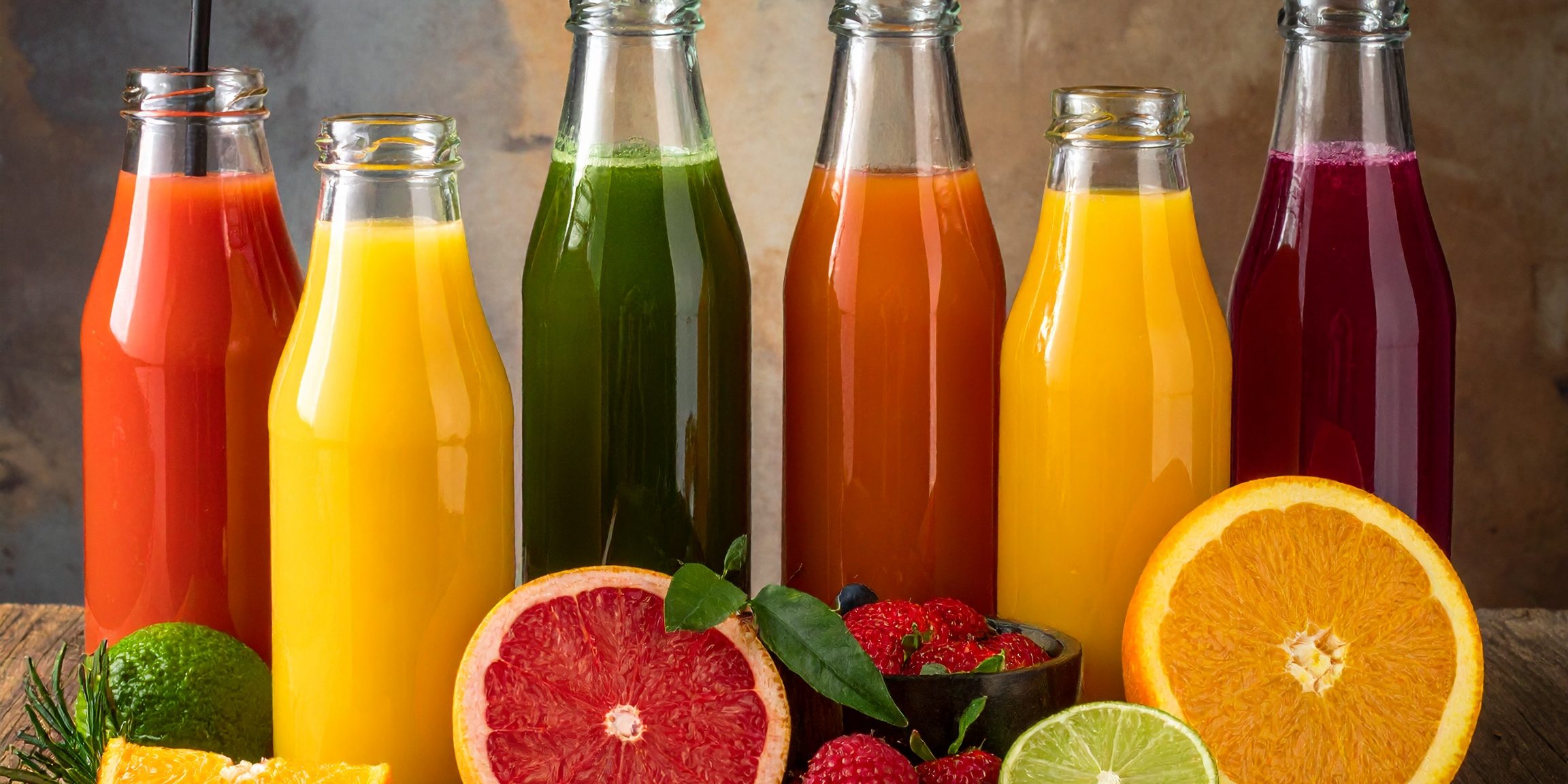
A juice cleanse aims to replace all food with fruit and vegetable juice for a few days. The promise is that it flushes out “toxins.”
The detox claim doesn’t hold up. Your body already has a detox system, and it runs around the clock. Your liver changes harmful chemicals into forms your body can get rid of (standard physiology). Your kidneys filter roughly 150 quarts (about 140 litres) of blood every day. No ingredient in juice has been shown to make either organ work faster. The U.S. National Institutes of Health reviewed the evidence and found no convincing proof that detox or cleanse programs remove toxins or improve health. A useful question for any cleanse seller: which toxin(s) are you targeting, and how do you know its been eliminated?
Why you feel clean on day two. Eating almost nothing changes how you feel. Placebo effects are real, and symptoms like headaches and tiredness often get blamed on “toxins leaving the body” when they’re probably from eating very little.
Here’s what’s actually going on:
1. You’re consuming sugar without the fiber. Juicing strips out fiber. Without it, the sugar absorbs quickly, which can cause blood sugar spikes and crashes. That also helps explain the cravings and overeating many people report after a cleanse.
2. You consumer too little protein. Juice is low in protein and fat. Over longer stretches, that raises the risk of muscle atrophy and malnutrition.
3. The oxalate problem. Spinach and beets are high in oxalate, a natural compound. Drink a lot of it and it can build up in the kidneys as tiny crystals, a condition called oxalate nephropathy that can cause lasting kidney damage. It’s most dangerous for people who already have kidney disease, and a published case involved someone who stayed on a juice diet for six weeks. It’s rare in healthy people, but it shows that “all natural” doesn’t mean “harmless.”
4. Changed in gut bacteria: mixed and short-lived. One study found helpful bacteria increased during a three-day juice diet, then returned to baseline within two weeks of normal eating. A 2025 Northwestern University study, as summarized in secondary coverage, reported that even three days of juice-only eating shifted gut bacteria in ways linked to inflammation. Neither result supports the “reset” idea.
5. The inevitable rebound. An all-or-nothing approach can set up a binge cycle afterward.
If you simply enjoy a glass of juice, that’s fine. The problems are the “cleanse” claims and the long, restrictive stretches.
The common thread
Both diets work the same way. They cut out whole categories of food, shrink what you eat, and wrap it in the language of cleansing and healing. You feel different, and that gets mistaken for proof. But your body didn’t need a reset. It needed what it always needs: fiber, a mix of nutrients, and enough protein.
Scorecard
| The pitch | What’s actually happening | Verdict |
|---|---|---|
| “Plants are toxic; meat is all we need” | No evidence that removing plants helps; fiber, vitamin, and mineral gaps | Not supported |
| “Carnivore fixes your health” | Early weight loss is common; LDL often rises; no randomized trials | Unproven, with risks |
| “Juice flushes out toxins” | Liver and kidneys already do this; no proof juice helps | Myth |
| “Juice resets your gut” | Mixed, short-lived effects | Unconvincing |
| “Juice is natural, so it’s safe” | Sugar spikes, protein shortfalls, oxalate risk | Not risk-free |
A note for Canadian readers
You don’t have to look far for a better plan, and it’s boring in the best way. Canada’s Food Guide recommends plenty of vegetables and fruit, whole grains, and protein foods, with plant-based proteins chosen more often because they supply more fibre and less saturated fat. It names water as the drink of choice, and it left fruit juice behind: the guide treats juice as a sugary drink, a change from the earlier edition that counted 100% juice toward your fruit. Health Canada’s guidance points away from both the all-meat plate and the all-juice glass. If you’re confused or tempted by a trend, talk to a Registered Dietitian rather than a “nutritionist” you found online. In Ontario, only members of the College of Dietitians of Ontario can use the RD title. Ontarians can reach one free by calling 811 or using Health811’s online chat, with no referral and no OHIP number needed, and Dietitians of Canada’s Unlock Food website offers free, expert-written articles. Newfoundland and Labrador runs a similar Dial-a-Dietitian service through its 811 line. If you take medication for blood pressure, diabetes, or cholesterol, check with your doctor before trying any restrictive diet at all.
This post is educational, not personal medical advice.
Sources
- “Carnivore Diet: A Scoping Review of the Current Evidence, Potential Benefits and Risks.” Nutrients 2026;18(2):348. PMC | DOI: 10.3390/nu18020348
- Health Canada, Canada’s Dietary Guidelines, Section 1: Foundation for healthy eating
- Canada’s Food Guide
- Science Focus: What eating only meat does to your health
- ZOE: Does the carnivore diet really work?
- Research review of the 2026 Nutrients scoping review
- Acibadem: The carnivore diet, what is known and Carnivore diet clinical research
- Acibadem: Juice cleanse, what actually happens
- Medical News Today: juice cleanses
- Biology Insights: Is a juice cleanse good for you?
- Chief Nutrition: Do juice cleanses work?
- Rhitrition: Avoid a cleanse diet
- Canada’s Food Guide coverage: CTV News, Ontario Tech University, Fraser Health
- Dietitian access: Health811 Dietitian Counselling Service, Eastern Ontario Health Unit, Government of Newfoundland and Labrador
This page is also available in:
 English
